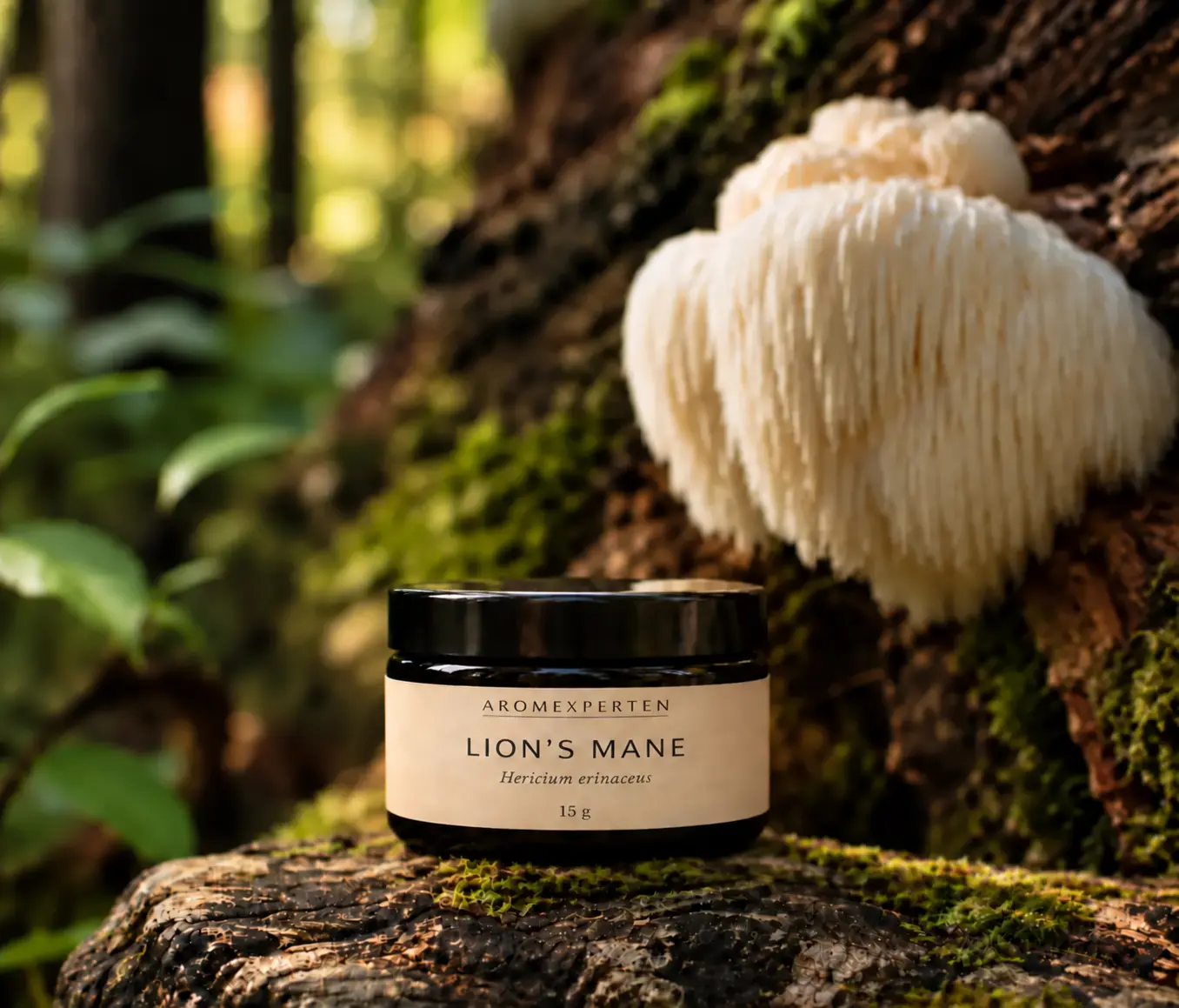
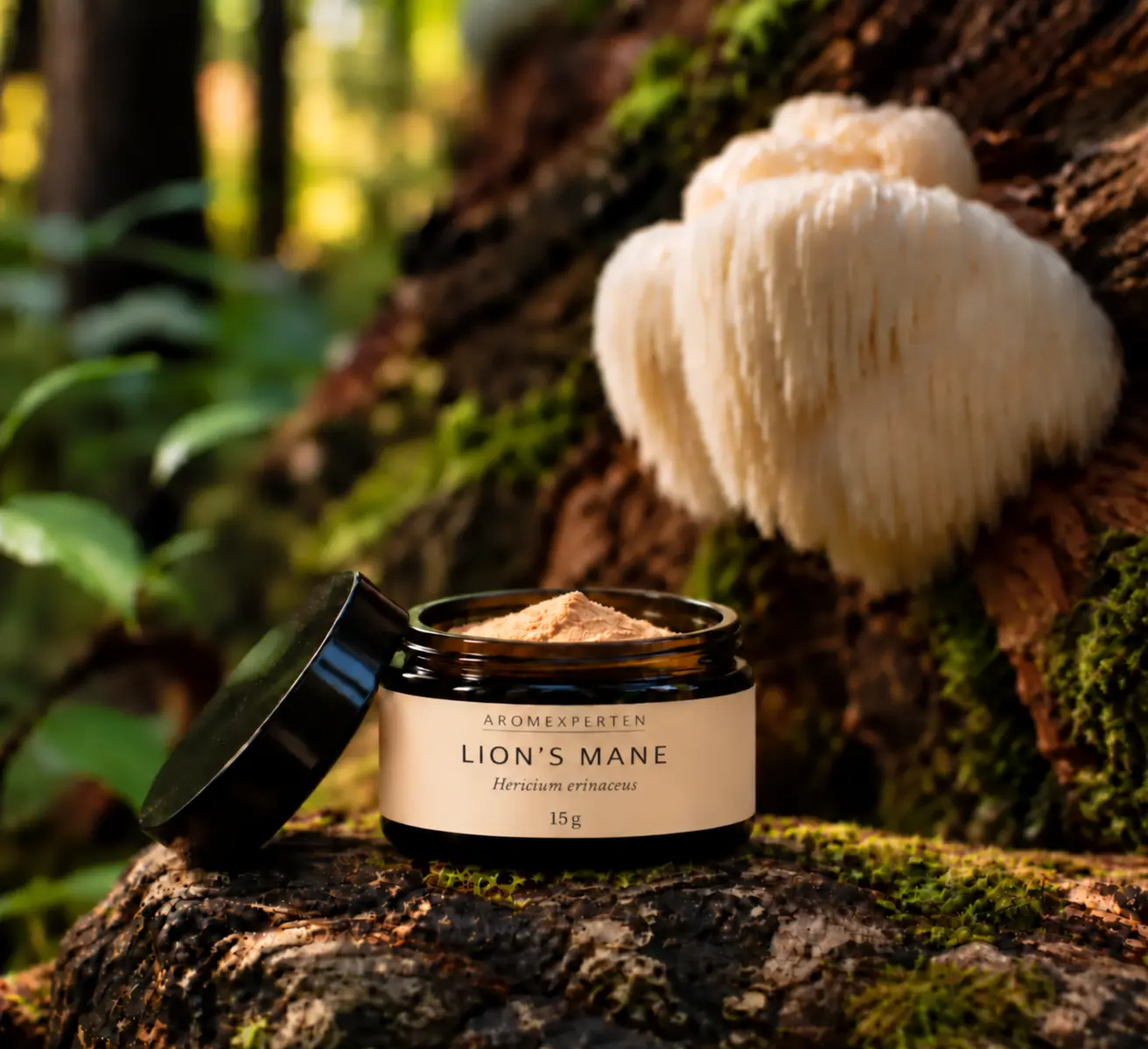
Lion’s Mane Extract – Organic Hericium erinaceus

The Lion’s Mane extract consists of 100% organic Hericium erinaceus fruiting body. The raw material is water-extracted and freeze-dried in Finland and has specified minimum values for selected analytical parameters.

FRUITING BODY
100% FRUITING BODY
1,3:1,6-BETA-GLUCANS
≥18%
HERICENONES/HERICENES
≥0.05%
WATER EXTRACTION
H₂O + FREEZE-DRYING

Original price was: 39,90 €.Current price is: 31,92 €. incl. VAT

In stock

💳 Secure payment

🔙 14-day right of withdrawal

🚚 Fast delivery

Swedish flag Swedish company

💳 Secure payment

🔙 14-day right of withdrawal

🚚 Fast delivery

Swedish flag Swedish company

Swish (SE)
Apple Pay
Google Pay
Maestro
Visa
MasterCard
Bank Transfer

Lion’s Mane extract is an organic extract of 100% fruiting body from Hericium erinaceus. KÄÄPÄ Biotech water-extracts and freeze-dries the raw material in Finland. The specification also states a minimum of 18% 1,3:1,6-beta-glucans and a minimum of 0.05% total hericenones/hericenes.

Unlike ordinary milled mushroom powder, the raw material goes through several processing steps. First, the producer dries the fruiting bodies and breaks them down using cell-disrupting milling. The raw material is then extracted with water and the extract is freeze-dried. Finally, third-party laboratories carry out quality controls.

Quick facts about the Lion’s Mane extract

Scientific name Hericium erinaceus
Product form Extract powder
Raw material 100% fruiting body
Mycelium No mycelium included according to the raw material specification
Certification EU organic
Extraction liquid Water
1,3:1,6-beta-glucans ≥18%
Total hericenones/hericenes ≥0.05%
Moisture content ≤8%
Manufacturing Finland
Raw material origin EU and non-EU countries

Why choose this Lion’s Mane extract?

There are big differences between Lion’s Mane raw materials. Some products consist of ordinary milled mushroom powder, while others are based on extracts. In addition, the raw material may consist of fruiting body, mycelium or a combination of several parts of the mushroom.

This raw material, by contrast, has a clearly documented specification. That is why the raw material, its processing and its analysed properties can be described more precisely.

  • 100% fruiting body from Hericium erinaceus
  • EU organic certified raw material
  • ≥18% 1,3:1,6-beta-glucans
  • ≥0.05% total hericenones/hericenes
  • Only water is used as extraction liquid
  • Water-extracted and freeze-dried
  • Freeze-dried
  • Manufactured in Finland
  • Third-party tested
  • Specified microbiological and heavy metal limits

What is Lion’s Mane?

Lion’s Mane is the English name of the mushroom Hericium erinaceus. In Swedish, the species is often called igelkottstaggsvamp.

The mushroom has a very distinctive appearance. Instead of gills or tubes, Lion’s Mane develops long, white spines that hang down from the fruiting body.

Taxonomically, Hericium erinaceus belongs to the genus Hericium, the family Hericiaceae and the order Russulales.

Above all, it is important to distinguish the mushroom species itself from different commercial product forms. Dried mushroom, powder, mycelium and extract describe different types of raw materials.

In other words, the species name tells you which mushroom it is, while the product form tells you how the raw material has been processed.

See taxonomic information at Index Fungorum – Hericium erinaceus.

Lion’s Mane is one of several mushroom raw materials in our range. Explore the whole
mushroom extracts category.

Lion’s Mane fruiting body or mycelium?

When comparing Lion’s Mane products, you should check which part of the mushroom the producer actually uses.

The fruiting body is the visible part of the mushroom that develops the characteristic white spines.

The mycelium, on the other hand, consists of a network of fungal hyphae that grows in or on a substrate.

The two parts belong together biologically but do not necessarily have an identical chemical profile. That is why a serious product description should always state which part of the mushroom the raw material is based on.

According to the manufacturer’s specification, this Lion’s Mane extract consists of 100% fruiting body from Hericium erinaceus.

This also means that the raw material should not be described as a mycelium extract.

What are beta-glucans in Lion’s Mane?

Beta-glucans are polysaccharides that occur naturally in the cell walls of mushrooms.

In Hericium erinaceus, for example, researchers have isolated beta-glucans from the fruiting body with a predominantly beta-(1→3) structure and beta-(1→6) branching.

That is why beta-glucans are a relevant analytical parameter when laboratories characterise mushroom raw materials.

Specified content: The Lion’s Mane extract contains a minimum of 18% 1,3:1,6-beta-glucans. The manufacturer states Megazyme K-YBGL as the analytical method.

At the same time, it is important to distinguish beta-glucans from the broader term polysaccharides. Not all polysaccharides are beta-glucans.

Consequently, a general polysaccharide value does not automatically tell you how much beta-glucan a raw material contains.

Read the scientific study: A beta-D-glucan isolated from the fruiting bodies of Hericium erinaceus.

What are hericenones in Lion’s Mane?

Hericenones are a group of natural secondary metabolites that researchers have identified from fruiting bodies of Hericium erinaceus.

The research describes several different hericenone-related compounds. In addition, modern analytical studies continue to map the chemistry of Lion’s Mane fruiting bodies.

At the same time, it is important to distinguish between hericenones and erinacines.

Researchers have mainly identified hericenones from the fruiting body, while several erinacines occur mainly in studies on mycelium.

The manufacturer’s specification states a minimum of 0.05% total hericenones/hericenes, analysed by LC-MS.

This information therefore describes the chemical specification of the raw material and not a physiological or medical effect.

See an example of research on compounds from Lion’s Mane:

Hericium erinaceus cultivated under tropical conditions – hericenones from fruiting bodies
.

How is the Lion’s Mane extract made?

KÄÄPÄ Biotech produces the extract through a combination of mechanical processing, water extraction and freeze-drying.

For Lion’s Mane, the process involves several steps. First, the producer dries the fruiting bodies. Then the raw material is broken down and water extraction follows.

  1. The producer dries the Hericium erinaceus fruiting bodies.
  2. The raw material undergoes cell-disrupting milling.
  3. KÄÄPÄ Biotech extracts the material with water.
  4. The producer freeze-dries the extract.
  5. The dried extract is milled into powder.
  6. Third-party laboratories carry out quality controls.

The cell walls of mushrooms contain, among other things, chitin and complex polysaccharide structures. That is why an extraction process differs from simply milling dried mushroom.

According to the manufacturer’s documentation, cell-disrupting milling is used before the water extraction. The purpose of this processing is to break down the structure of the raw material ahead of the extraction step.

The product is therefore a water-extracted and freeze-dried extract powder, not just finely milled dried mushroom.

Lion’s Mane powder or Lion’s Mane extract?

Ordinary mushroom powder and mushroom extract describe two different product forms.

Product form Processing
Ordinary Lion’s Mane powder The producer dries and mills the mushroom
Water extract The producer processes the mushroom with water
This Lion’s Mane extract Cell disruption, water extraction and freeze-drying
Raw material with specified markers Laboratories check selected chemical parameters

In other words, the word “powder” mainly describes the physical form. An extract, on the other hand, also tells you how the producer has processed the raw material.

This Lion’s Mane extract also combines the documented extraction process with specified minimum values for beta-glucans and hericenones/hericenes.

Lion’s Mane extract manufactured in Finland

KÄÄPÄ Biotech Oy manufactures the Lion’s Mane extract in Karjalohja, Finland.

Among other things, the company carries out extraction, freeze-drying, milling and quality control in Finland.

According to the specification, the Lion’s Mane raw material comes from both the EU and non-EU countries. However, the purified water the producer uses during the extraction process comes from Finland.

That is why it is more accurate to describe the product as manufactured and extracted in Finland than to claim that the Lion’s Mane mushroom itself is always grown in Finland.

Organic Lion’s Mane extract

The manufacturer’s documentation states that the raw material is EU organic certified.

According to the specification, the Finnish Food Authority is the organic certification body.

KÄÄPÄ Biotech also states FSSC 22000 certification, with Kiwa Inspecta as the certification body.

Taken together, there is documented information both about the organic status of the raw material and about the manufacturer’s quality system.

Laboratory-tested quality

The manufacturer’s raw material specification contains defined limits for microbiological parameters and heavy metals.

In addition, the laboratories use different analytical methods depending on which parameter they check.

Microbiological specifications

Parameter Specification
Total aerobic microorganisms ≤100,000 CFU/g
Mould ≤1,000 CFU/g
Yeast ≤1,000 CFU/g
Escherichia coli ≤100 CFU/g
Salmonella Not detected

Heavy metal specifications

Parameter Specification
Lead ≤3.0 ppm
Cadmium ≤1.0 ppm
Mercury ≤0.1 ppm
Arsenic ≤2.0 ppm

For heavy metals, the laboratory uses ICP-MS according to SFS-EN ISO 17294-2, as stated in the specification.

A specification and a batch result are not the same thing. The table above shows the manufacturer’s defined raw material specification. If a separate batch COA is available, it should form the basis for actual analytical results from a specific delivery.

Storage of Lion’s Mane extract

Keep the raw material tightly sealed and protect it from direct light, moisture and oxygen.

The manufacturer’s specification states a storage temperature of approximately 15–20 °C.

In addition, the specification states a shelf life of 36 months under the recommended conditions.

In practice, the packaging should therefore be kept properly closed after handling to limit exposure to air and moisture.

Product classification

Botanical mushroom raw material: The product is sold for technical and raw material purposes. It is not sold as food or a food supplement and is not intended for consumption.

Want to compare Lion’s Mane with other documented mushroom raw materials? See our full range of mushroom extracts.

Frequently asked questions about Lion’s Mane extract

Is this Lion’s Mane made from fruiting body or mycelium?

According to the manufacturer’s specification, the raw material consists of 100% fruiting body from Hericium erinaceus. No mycelium is included according to the raw material documentation.

How much beta-glucan does the Lion’s Mane extract contain?

The specification states a minimum of 18% 1,3:1,6-beta-glucans.

Does the raw material contain hericenones?

Yes. The specification states a minimum of 0.05% total hericenones/hericenes. The manufacturer also states LC-MS as the analytical method.

Is the Lion’s Mane raw material organic?

Yes. The manufacturer’s documentation states that the raw material is EU organic certified.

Which extraction liquid is used?

The producer uses only water as the extraction liquid.

Is this ordinary Lion’s Mane powder?

No. After the initial processing of the fruiting bodies, the product undergoes cell-disrupting milling, water extraction and freeze-drying.

What is the difference between Lion’s Mane powder and extract?

Ordinary powder mainly consists of dried and milled mushroom. An extract, on the other hand, goes through a separate extraction process. For this raw material, the processing includes cell-disrupting milling, water extraction and freeze-drying.

Where is the Lion’s Mane extract manufactured?

KÄÄPÄ Biotech Oy manufactures the extract in Karjalohja, Finland.

Is all of the mushroom raw material from Finland?

No. The manufacturer states the geographical origin of the Lion’s Mane raw material as the EU and non-EU countries. However, the extraction and manufacturing take place in Finland.

What is the difference between hericenones and erinacines?

Hericenones and erinacines are different groups of natural metabolites from Hericium erinaceus. Research mainly links hericenones to the fruiting body, while several erinacines occur mainly in studies on mycelium.

Summary

This Lion’s Mane extract is an organic extract powder made from 100% fruiting body of Hericium erinaceus.

KÄÄPÄ Biotech processes the raw material through cell-disrupting milling, water extraction, freeze-drying and third-party testing in Finland.

In addition, the specification states a minimum of 18% 1,3:1,6-beta-glucans and a minimum of 0.05% total hericenones/hericenes.

No mycelium is included according to the raw material specification, and the producer uses only water as the extraction liquid.

Taken together, the combination of documented mushroom part, extraction method, chemical minimum values and laboratory control provides a considerably more detailed raw material description than the term “Lion’s Mane powder” alone.

Sources and documentation

Last fact-checked:

Weight 0,1 kg
Weight

15g

Reviews

There are no reviews yet

Show only reviews in English (0)

Be the first to review “Lion’s Mane Extract – Organic Hericium erinaceus”

Your email address will not be published. Required fields are marked *

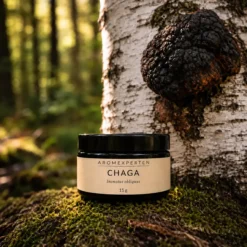
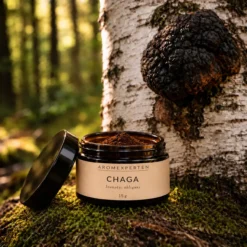
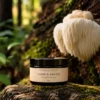
Lion's Mane extrakt från Aromexperten i mörk glasburk framför Lion’s Mane-svamp i naturlig skogsmiljö.
Lion’s Mane Extract – Organic Hericium erinaceus

In stock