Svenska
 News
News Botanical Blends
 Mitragyna
 Kanna (sceletium tortuosum)
 Akuamma (Picralima nitida)
 Tongkat Ali (Eurycoma longifolia)
 Blue Lotus (Nymphaea caerulea)
 Sakae Naa
 Wild Lettuce (Lactuca virosa)
 Damiana (turnera diffusa)
 Zornia latifolia (Maconha Brava)
 CBD products
 Aromatherapy
Botanicals
What is eurycomanone? Marker compound in Tongkat Ali
Aug
What is eurycomanone? It is a naturally occurring plant compound that researchers have identified in Eurycoma longifolia, the plant commonly known as Tongkat Ali. The compound belongs to the quassinoids and is used, among other things, as a chemical marker compound in quality control of certain Tongkat Ali extracts.
What is eurycomanone?
The compound is a quassinoid that occurs naturally in Eurycoma longifolia. Researchers have identified several quassinoids in the plant, and this compound is one of the most commonly used chemical markers when analysing root material and extracts.
Laboratories primarily use the marker to describe parts of the raw material’s chemical profile. However, on its own it does not provide a complete picture of product quality. Origin, plant part, extraction method, and other analyses also play an important role.
A scientific review of Eurycoma longifolia describes both the plant’s chemical components and various analytical methods. You can read the review on PubMed Central.
Why is the compound used as a marker compound?
A marker compound is a chemical component that a laboratory can identify and measure. This allows the producer to verify a raw material against established specifications.
For Tongkat Ali, this quassinoid is particularly useful because laboratories can analyse it using established chromatographic methods. In addition, it is repeatedly referenced in the scientific literature on Eurycoma longifolia.
In short: the analytical value serves as a measurable quality parameter. However, a single chemical marker should not be used as the sole measure of the quality of a botanical raw material.
How do laboratories analyse the compound?
Laboratories use, among other things, chromatographic methods to separate and measure different components in a sample. HPLC, high-performance liquid chromatography, is an example of a method that researchers have used when analysing Tongkat Ali.
First, the laboratory prepares the sample. The analytical equipment then separates different chemical compounds. Finally, the analyst compares the results with a reference to identify and quantify the marker in question.
Researchers have, for example, combined HPLC with other methods to examine the identity and chemical profile of commercial Tongkat Ali products. The study is published via PubMed Central.
Standardization and analytical values
Standardization means that the producer defines specifications for one or more quality parameters. The producer then analyses each production batch and compares the result with these limit values.
A standardized extract can therefore use several analytical parameters at the same time. As a result, the documentation often provides a broader picture than a single measured value.
This differs from a ratio extract. A ratio such as 100:1 describes the relationship between plant material and finished extract, but does not automatically state the content of a specific chemical marker.
If you would like to understand the difference in more detail, please read our guide on Tongkat Ali powder or extract.
The marker compound in Physta®
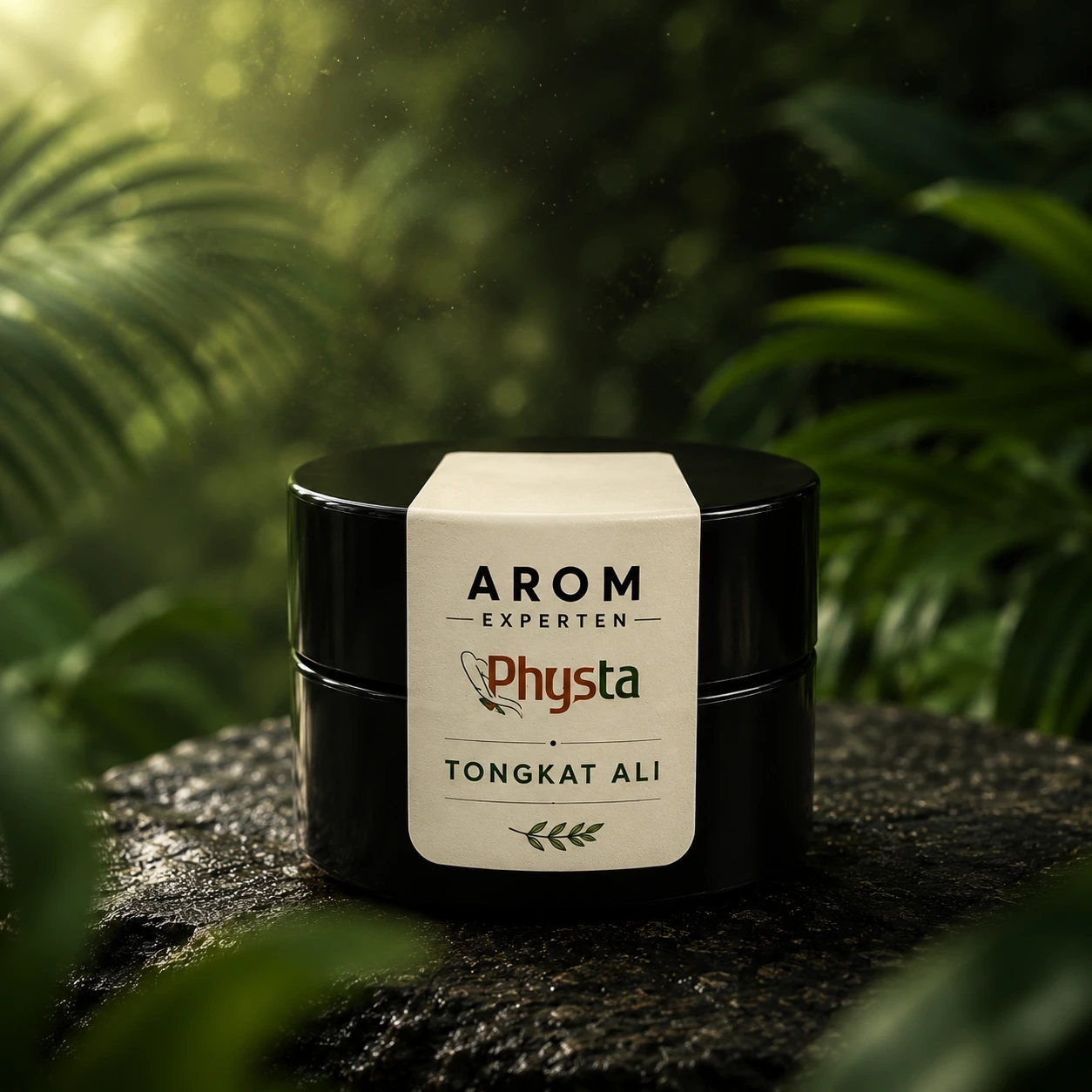
Physta® is a standardized water extract from the root of Eurycoma longifolia. The manufacturer checks several defined quality parameters for each production batch.
For this raw material, these include, among other things, the quassinoid in question together with glycosaponins, polysaccharides, and total protein fraction. This means the standardization is not based on a single parameter.
Current batch TA 2506105
- Measured value: 0.87%
- Established specification: 0.8–1.5%
The result applies only to the current production batch. Future batches may therefore show different values within the established specification.
You can read more about the extract in our guide What is Physta®?. There we also explain the water extraction, the standardization, and other batch documentation.
You can also view the current Tongkat Ali Physta® product and batch information.
How do you read the analytical value in a COA?
A Certificate of Analysis (COA) summarizes laboratory results for a specific production batch. Therefore, it is important to first check that the document’s batch number matches the product in question.
| Term | Meaning |
|---|---|
| Specification | The range or limit value established by the producer |
| Result | The value shown by the analysis for the current batch |
| Batch number | Identifies the production run to which the document applies |
| Analytical method | States which method the laboratory used |
For a standardized raw material, the producer therefore compares the measured result with the relevant specification. This makes it possible to verify whether the batch meets the established criteria.
See the Certificate of Analysis for Physta® batch TA 2506105.
Frequently asked questions
Is eurycomanone the same thing as Tongkat Ali?
No. Tongkat Ali is the common name for the plant species Eurycoma longifolia. The chemical compound is only one of many components that may occur in the plant material.
Is the compound found in all Tongkat Ali products?
Chemical composition can vary between raw materials and products. Among other things, origin, plant material, and processing affect the final profile. In addition, different producers may use different analytical methods and specifications.
Does a higher analytical value automatically mean better quality?
No. A higher value does not automatically mean higher overall quality. For a standardized extract, it is more relevant to check whether the current batch meets the product’s established specification and what other documentation is available.
Why does Physta® analyse multiple parameters?
Botanical raw materials consist of many different components. Therefore, the producer checks several defined parameters instead of describing the extract using only a single chemical marker.
Where can I read more about the plant itself?
In our guide What is Tongkat Ali? we cover Eurycoma longifolia, its origin, botany, and different raw material forms.
Sources and Further Reading
Read more about Tongkat Ali and Physta®
Explore the plant and its origin, read about the standardization of Physta®, or view the current Physta® batch and analytical documentation.

 Best Sellers