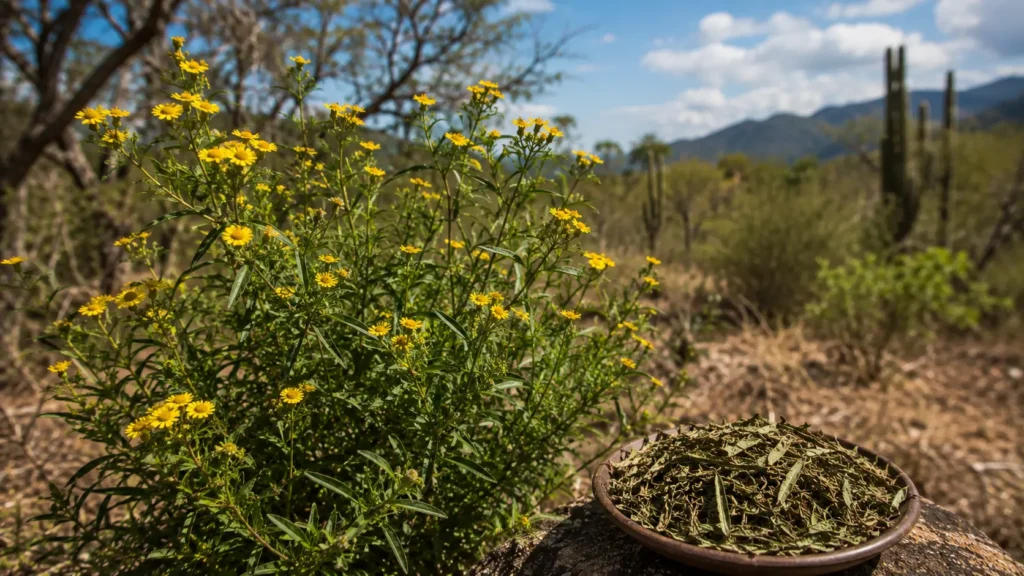
Calea zacatechichi, often called Mexican Dream Herb, is a well-known trade name and synonym for the Central American shrub that modern botanical taxonomy also knows as Calea ternifolia Kunth. The species belongs to the family Asteraceae and occurs naturally from Mexico through parts of Central America to Colombia. In this guide, we go through the […]
Category Archives: Botanicals
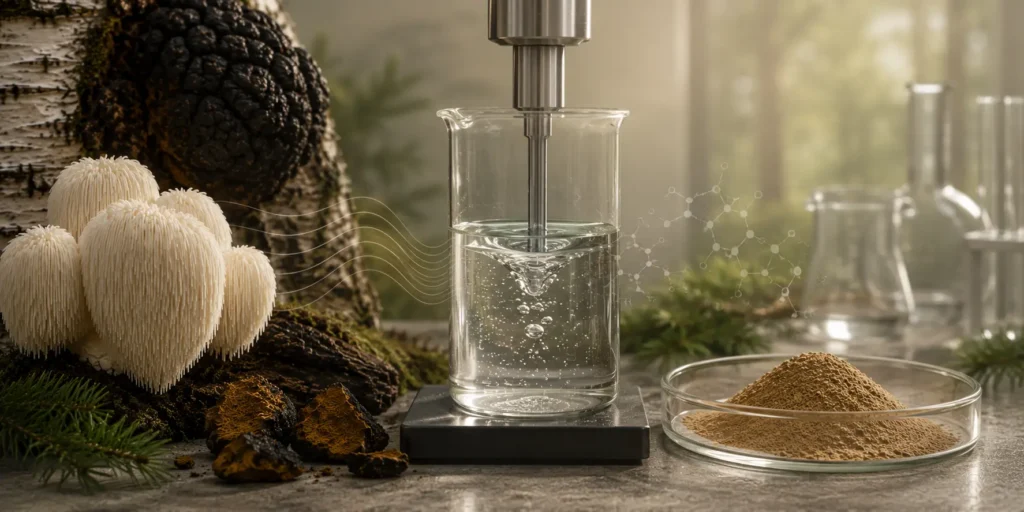
Mushroom extraction is about much more than grinding dried mushrooms into powder. When making a mushroom extract, the producer treats a defined mushroom raw material with an extraction medium under controlled process conditions. The process may, for example, combine water with heat, ultrasound or other techniques. The producer then needs to separate, stabilise and dry […]
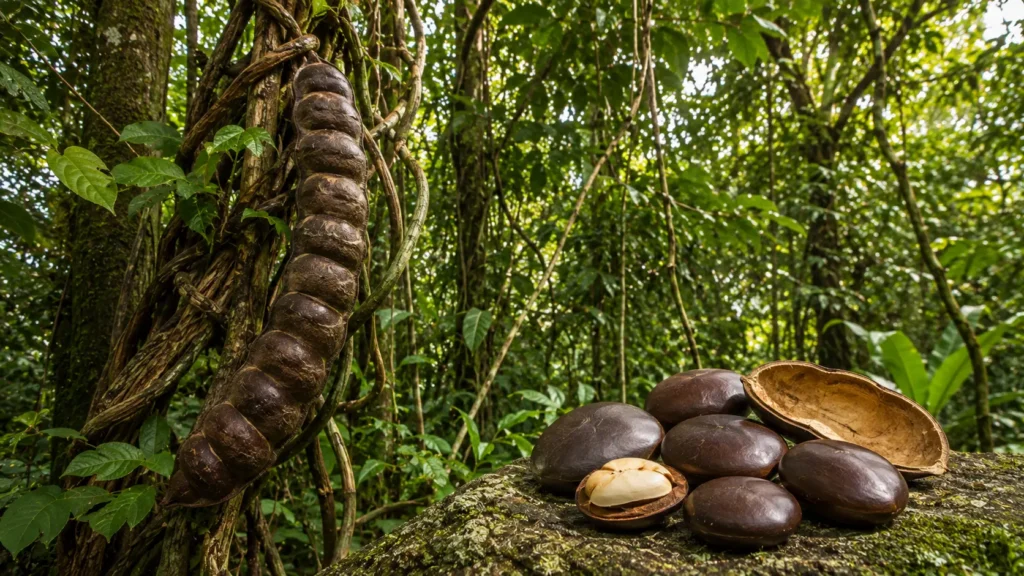
Entada rheedii is a common trade and literature name for the tropical climbing plant that Kew today accepts as Entada rheedei Spreng. The species belongs to the family Fabaceae and is particularly known for its very large pods and hard seeds. Scientific analyses of the seed kernel have also identified several characteristic saponins and other […]
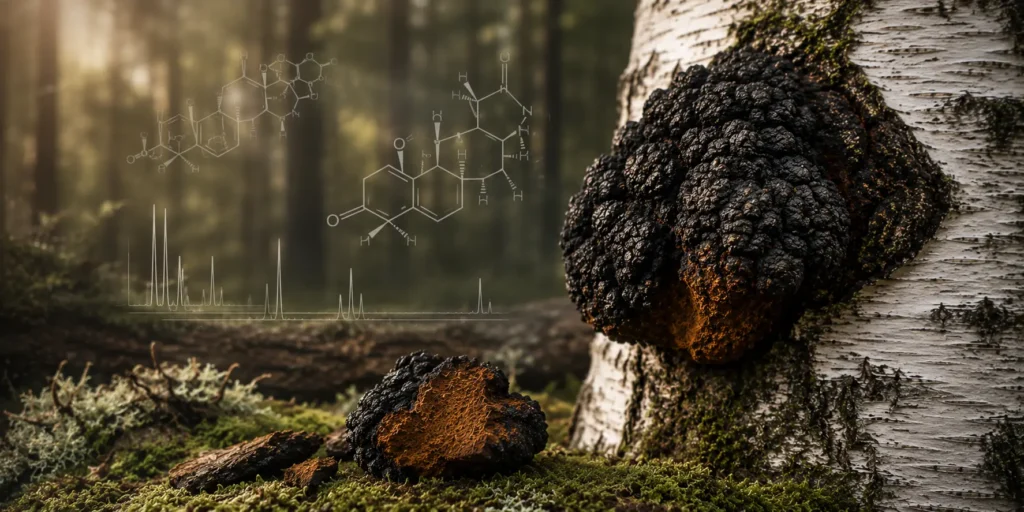
Inotodiol and betulinic acid in Chaga are two chemical markers that can give information about the raw material’s triterpenoid profile. Both appear in research on Inonotus obliquus, but a high analytical value does not automatically mean that a Chaga raw material is “stronger” or better. To interpret the values, you also need to understand the […]
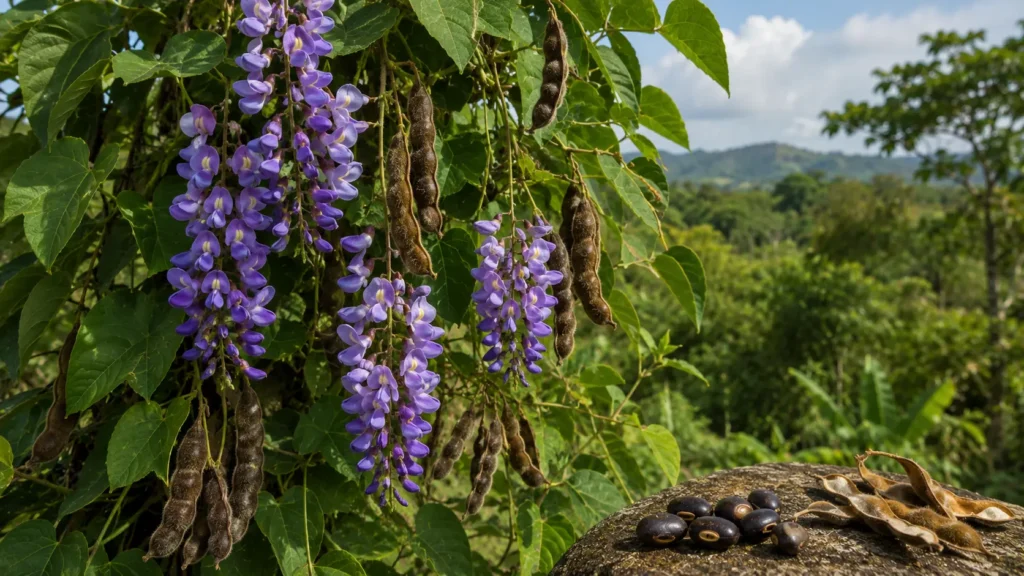
Mucuna pruriens, often called Velvet Bean, is a tropical climbing plant in the family Fabaceae. The species is particularly well known in botanical and chemical research because its seeds can naturally contain significant amounts of the amino acid derivative L-DOPA. At the same time, the plant consists of many more groups of compounds than this […]
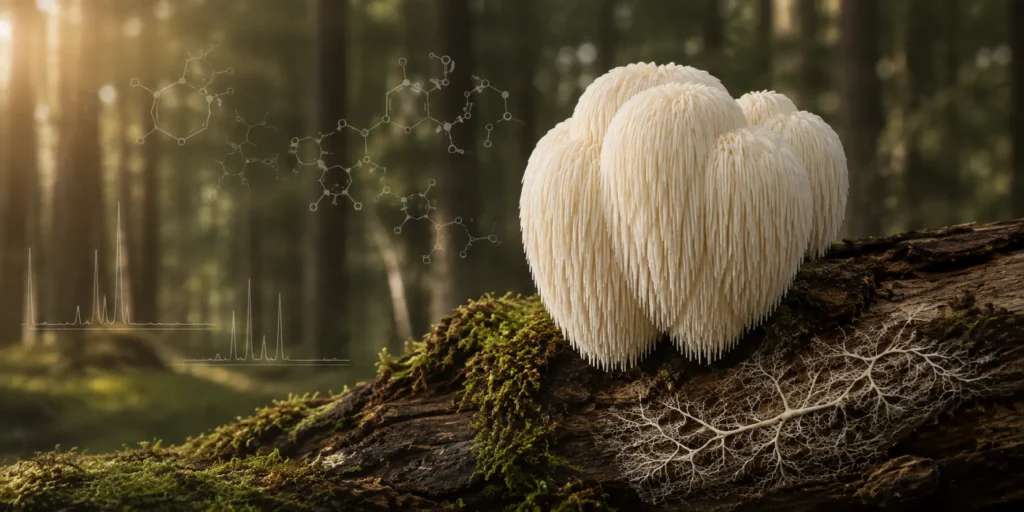
Hericenones and erinacines are two groups of secondary metabolites that researchers have studied in Lion’s Mane, Hericium erinaceus. They are sometimes confused, but they are not the same compounds, and they are also associated with different parts of the fungus. Hericenones have mainly been identified in the fruiting body, while several erinacines have been identified […]
Beta-glucans in mushroom extracts are an analytical parameter that can give valuable information about the composition of the raw material. At the same time, the percentage is easy to misinterpret. A higher beta-glucan value does not automatically mean, for example, that one mushroom extract is “stronger” or better than another. To interpret the value, you […]
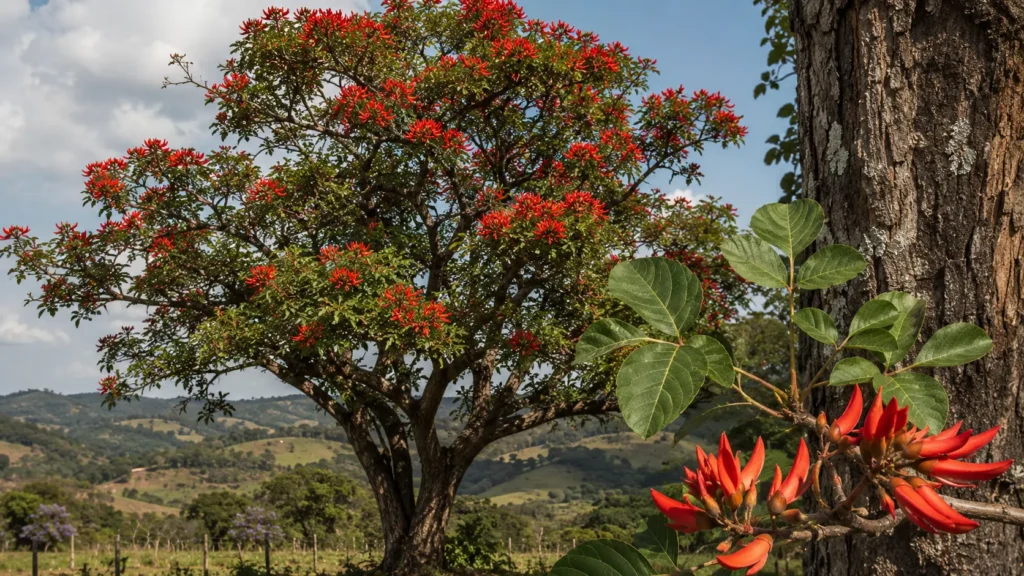
Erythrina mulungu, often called Mulungu, is a South American tree in the family Fabaceae. The species is characterised by, among other things, its striking red to red-orange flowers and belongs to the large genus Erythrina. Scientific analyses of the species have also identified several so-called erythrinian alkaloids. In this guide, we go through the plant’s […]
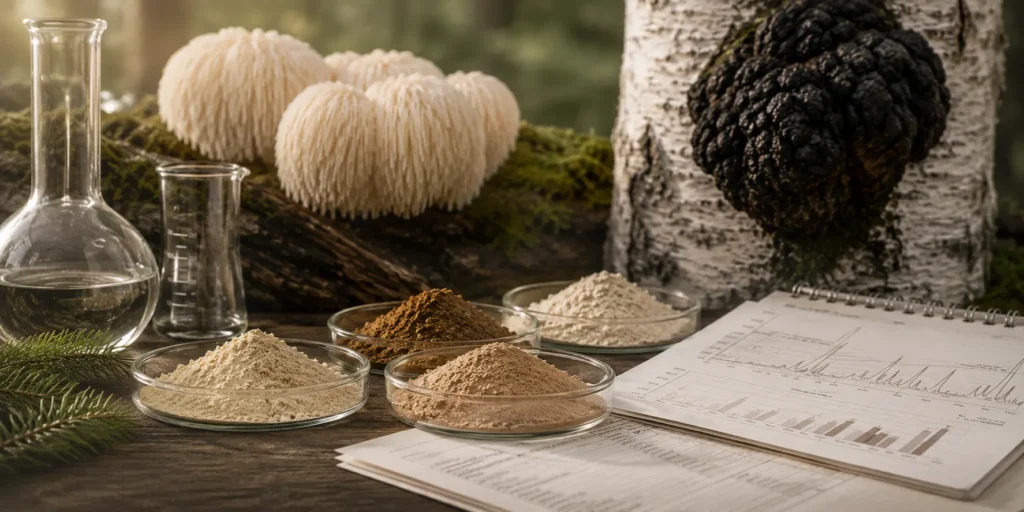
The quality of a mushroom extract cannot be judged from a single percentage or a word like “premium”. A more reliable assessment combines the species of the raw material, which part of the fungus the producer uses, origin, extraction process, analytical methods and documented quality parameters. That is why you need to look behind the […]
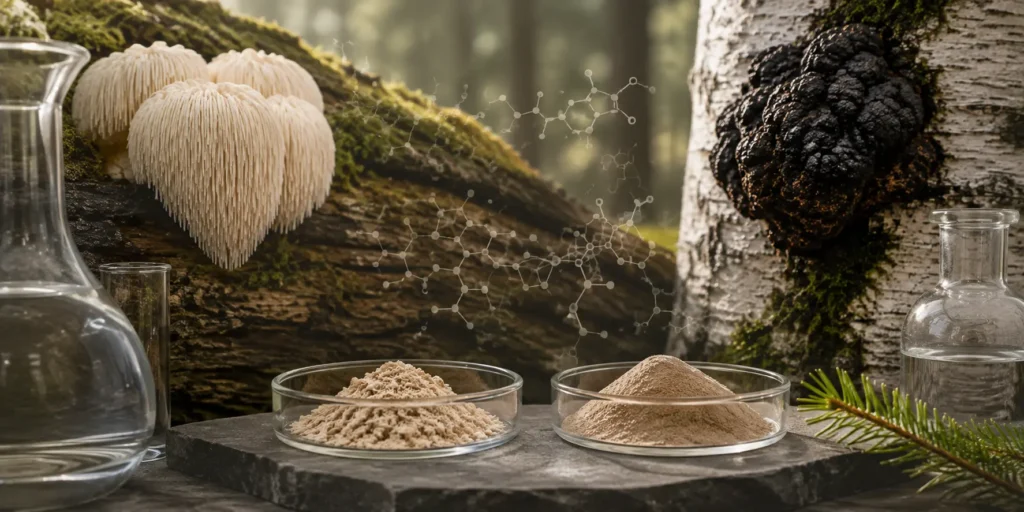
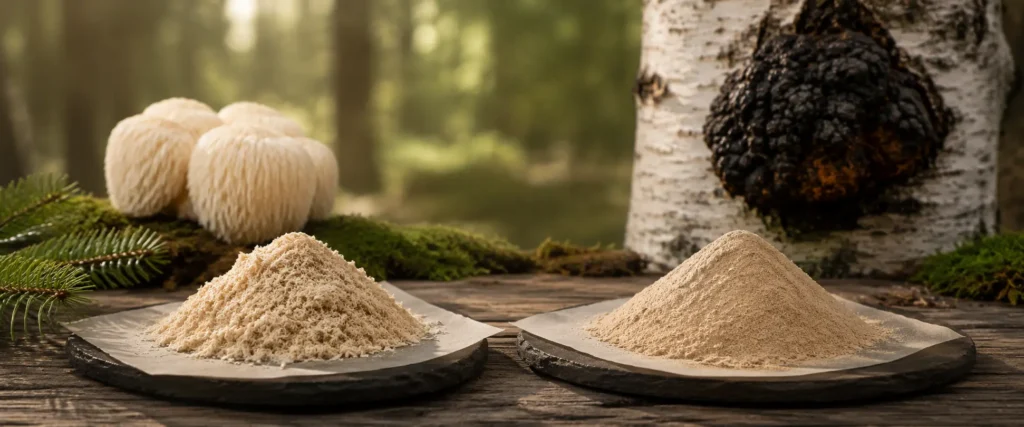
Mushroom powder vs mushroom extract – what is actually the difference? A standard mushroom powder basically consists of dried and finely milled mushroom material. A mushroom extract, on the other hand, undergoes additional processing in which the producer uses an extraction process to separate or concentrate parts of the raw material’s chemical profile. That is […]